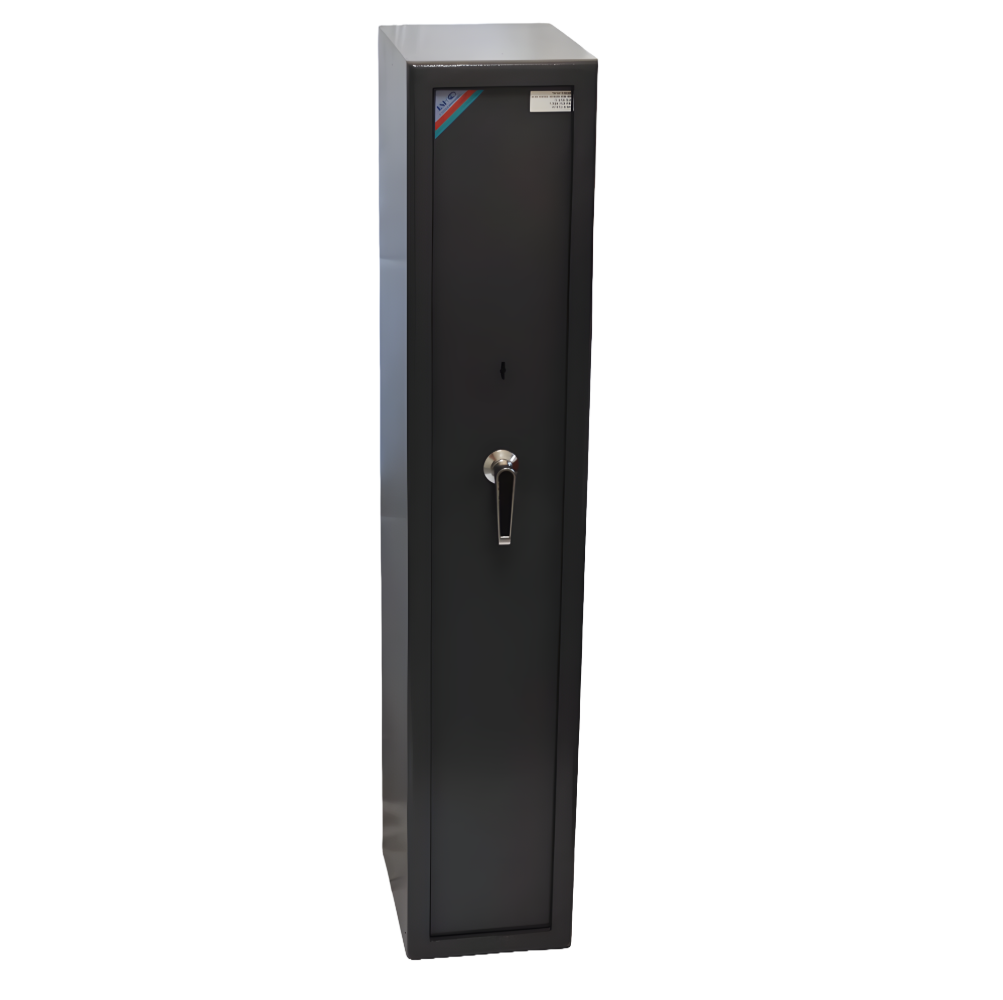
A handgun safe helps prevent unauthorised access to a licensed firearm and ammunition. JSH developed the PG-250 around dedicated handgun storage requirements, with a compact steel enclosure and provision for secure anchoring.
Use the current Firearm Licensing Division instructions applicable to your licence. Product specifications and legal requirements should be checked together before purchase and installation.
Everyday storage responsibilities
Choose a locked, concealed safe that prevents access by children and unauthorised household members. Keys and codes must not be shared with unauthorised people.
JSH PG-250
JSH describes the PG-250 as a compact handgun safe with the following features:
- External dimensions: 25 cm high, 35 cm wide and 25 cm deep.
- Weight: 23 kg; stated internal volume approximately 14 litres.
- Body: 4 mm steel; double door with a total stated thickness of 8 mm.
- Locking: double-bit key lock and an operating handle, with key access retained on configurations that also have electronic access.
- Bolts: four, stated as 22 to 25 mm in diameter.
- Installation: provision for four steel anchors into wall and floor.
- Finish: galvanised locking components and an oven-cured epoxy coating.
Frequently asked questions
Can an older safe still be used? It must be assessed against the current applicable requirements. Age alone does not establish compliance or non-compliance.
What should I check in a new handgun safe? Obtain the construction, locking and anchoring specifications and confirm that the exact model meets the applicable official requirements.
Does it need wall or floor anchoring? Have a professional installer confirm the fixing method, number of anchors and structural surfaces required for your safe and licence.
What does the PG-250 offer? The article presents its compact size, reinforced construction and locking arrangement as a response to the updated requirements. Obtain current product documentation and availability.
Is an ordinary home safe sufficient? Not automatically. A home safe must meet the firearm-specific requirements for the intended use. A thin steel enclosure or a keypad alone does not demonstrate this.
Can storage be inspected? Ask the licensing authority about the checks and documentation that apply to your licence and circumstances.
Can ammunition and a handgun be stored together? Follow the current official storage and handling instructions applicable to your licence. An authorised instructor can clarify the required arrangement.
What changes when children live in the home? The storage arrangement must prevent their access. Protect the keys, credentials and code as well as the safe itself.
Is proof of safe ownership or installation required at renewal? JSH advises that a declaration or check may be requested. Ask the licensing authority what documentation is required for your application.
Does home insurance cover a firearm stolen from an unsuitable safe? Coverage depends on the policy and circumstances. Confirm the storage conditions with the insurer.
Can the safe use a keypad or fingerprint reader? Check the current requirements for electronic access and mechanical backup, then confirm the selected lock configuration meets them.
Can it be installed in a residential protected room? Obtain professional advice on the concrete structure, anchoring and protected-room requirements before installation.
What happens when the batteries run out? Follow the installed lock's recovery procedure. Ask JSH to explain backup access and battery replacement at handover.
Ask JSH for the safe specification, installation scope and current availability. For legal and handling requirements, refer to the official government instructions.